
Ingénieur Agronomie 2ème Année
Rechercher des cours par Filière :
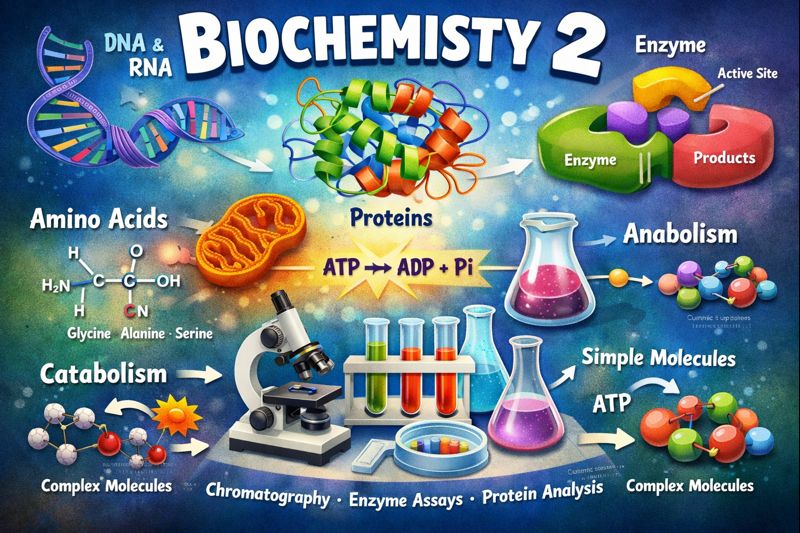
The Biochemistry 2 Lab course summarizes the key concepts from Biochemistry II. It enables students to acquire essential knowledge for understanding the molecular structures and the physical and chemical principles underlying the metabolism (catabolism and anabolism) of amino acids, proteins, enzymes, and nucleic acids.
The laboratory component provides students with hands-on experience in determining the pHi of glycine, characterizing amino acids with ninhydrin, assaying proteins using the Biuret method, performing chromatography (CCM) and extracting enzymes . This practical work helps students understand protein content, enzyme extraction, amino acid properties, and the roles of macromolecules in metabolism and cellular processes.
This course is designed for Agronomic Science Engineer – Fourth Semester (2nd year students).
- Enseignant: salima bouteraa
Biochemistry is the study of the chemical processes that sustain life, focusing on how cells acquire, transform, and utilize energy. Central to this discipline are the metabolic pathways of the major classes of biomolecules: carbohydrates, lipids and vitamines. These pathways are organized into two complementary processes: catabolism and anabolism.
-
Catabolism involves the breakdown of complex molecules into simpler ones, releasing energy that is often captured in the form of ATP and reducing power (NADH, FADH₂). It is essential for energy production and provides intermediates for biosynthetic reactions.
-
Anabolism, in contrast, is the constructive phase of metabolism. It requires energy input to synthesize complex macromolecules from simpler precursors, supporting cell growth, repair, and maintenance.
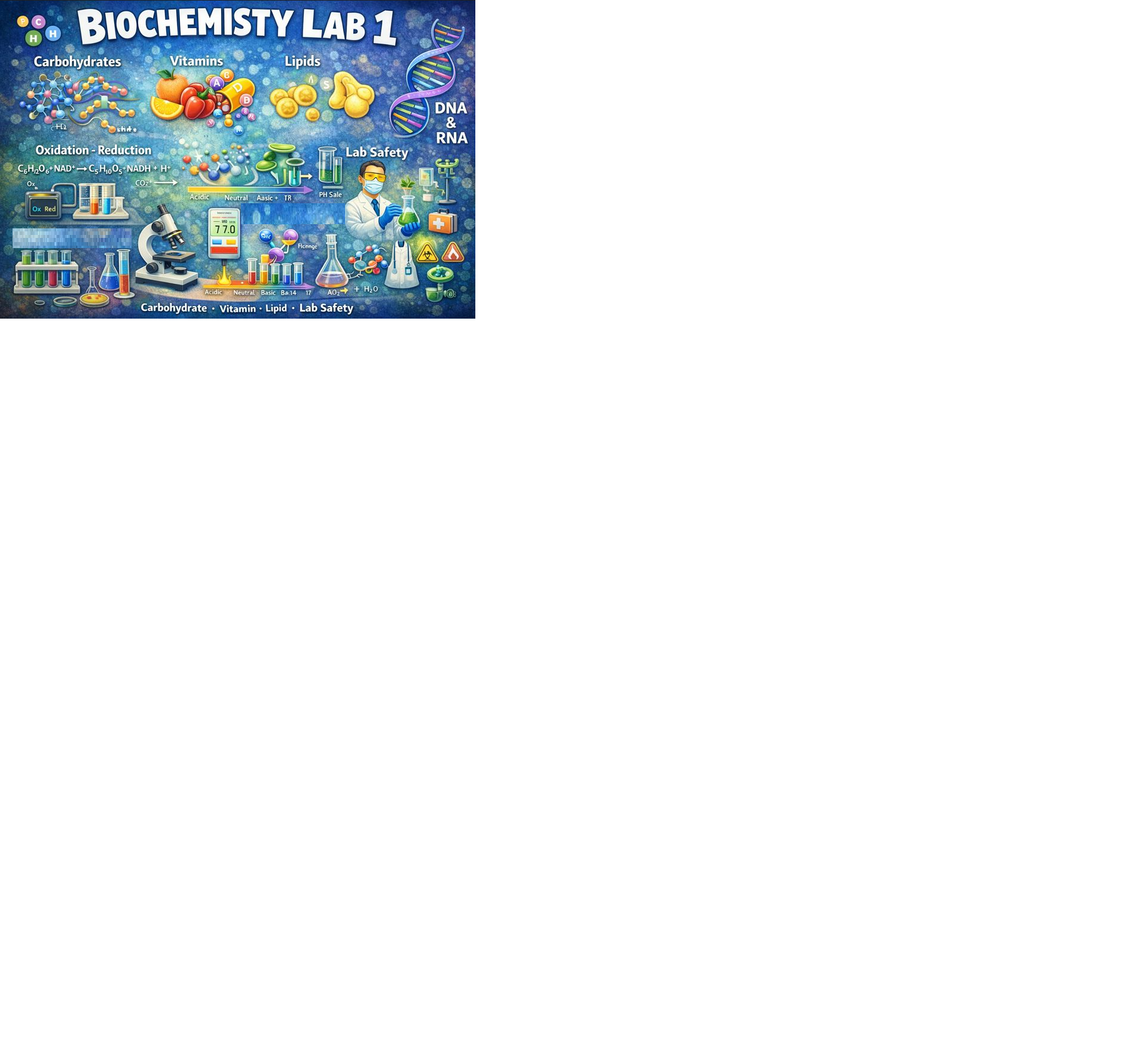
The biochemistry lab module provides students with a hands-on opportunity to apply the theoretical concepts covered in lectures. It enables them to acquire the essential knowledge needed to understand the molecular structures, physical and chemical principles, and the metabolism (catabolism and anabolism) of carbohydrates, lipids, and vitamins.
This Lab course is intended for Agronomic Science Engineer-Third Semester (2nd year students)
- Enseignant: salima bouteraa
Le Cours de Biochimie II traite l’aspect structural et métabolique des molécules biochimiques, tel que, les lipides, les α-aminoacides, les protéines, ainsi que la cinétique des enzymes. Chaque chapitre est enrichi et illustré par des figures explicatives et des tableaux récapitulatifs, et est traité d’une façon simple et concise afin de donner aux étudiants un aperçu général sur les différentes facettes de la chimie du vivant.
- Enseignant: zoubida elhadj
Plant biosystematics is a fascinating branch of biology that focuses on plant classification, identification, and evolutionary relationships. It integrates various methods, including morphology, molecular genetics, and ecology, Biochemistry, to understand the diversity and distribution of plant species. By analyzing genetic information and physical traits, plant biosystematics aims to clarify the evolutionary pathways and connections among different plant groups. This field is essential for conservation efforts, agriculture, and understanding the intricate web of life on Earth. It continually evolves with advancements in technology and research methodologies.
🌿 "Dear Student, Delve into plant biosystematics and become a pioneer in uncovering the hidden stories of nature! Your work will pave the way for conservation, innovation, and a deeper understanding of the world around us. Each leaf, root, and flower holds a tale waiting to be told, and you have the power to reveal it!" 🌿
Dr El Zerey-Belaskri
- Enseignant: Dr Asma El Zerey-Belaskri
La biochimie est une science expérimentale qui vise l’étude des processus chimiques et physiques fondamentaux du vivant. Elle s'intéresse en particulier aux structures, aux fonctions et aux interactions des macromolécules biologiques telles que les glucides, les lipides, les protéines et les acides nucléiques, qui constituent les structures cellulaires et réalisent de nombreuses fonctions biologiques. La complexité des processus chimiques biologiques est contrôlée à travers la signalisation cellulaire et les transferts d'énergie au cours du métabolisme.
- Enseignant: zoubida elhadj
- Enseignant: Naouel Amel BRAHIM TAZI
La biophysique en agronomie explore les processus physiques sous-jacents aux systèmes biologiques des plantes, du sol et des organismes vivants. Ce cours vise à montrer comment la biophysique permet de comprendre, modéliser et optimiser des processus agricoles pour améliorer la productivité, la gestion des ressources et la durabilité.

- Enseignant: Sid-Ahmed Chawki LAMARA